Verified Material Grade
SS 304 or SS 316 and SS 316L on all product contact surfaces, backed by mill test certificates issued in your company name.





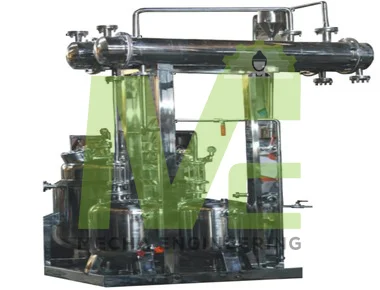
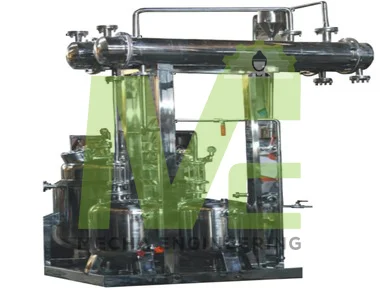
Mecha Engineering fabricates stainless steel herbal extraction plants at its Saharanpur works and installs them at psyllium, spice, ayurvedic and nutraceutical units across Gujarat. Vessels from 100 litres to 10,000 litres, manual to PLC controlled, built to the recipe you actually run.
Gujarat processes botanicals at a scale few states match. Unjha handles a large share of India's psyllium, cumin and fennel trade, and the isabgol and castor fields behind it run through Mehsana, Patan and Banaskantha. Jamnagar carries the state's ayurvedic teaching and research weight, Ahmedabad and Vadodara hold the pharmaceutical belt, and Ankleshwar, Bharuch and Vapi bring chemical grade solvent handling and the safety fittings that come with it.
One catalogue extractor cannot serve all of them. As a herbal extraction plant manufacturer in Gujarat, Mecha Engineering starts from the material you feed, the solvent you are allowed to use and the yield your buyer audits, then sizes the vessel, jacket, condenser and filtration around that. Fabrication happens at our own Saharanpur works, so drawings, welding, polishing and trials stay under one roof and one engineering team.
These are the points UP buyers check before releasing a purchase order, so we put them in writing rather than in a brochure line.
SS 304 or SS 316 and SS 316L on all product contact surfaces, backed by mill test certificates issued in your company name.
Water run, vacuum hold and leak test at our Saharanpur shop. Send your herb sample and we run a yield trial before the plant leaves.
Erection, piping tie-in, utility connection, commissioning and operator training at your Gujarat site, covered in the supply scope. Our engineer travels with the trailer to Ahmedabad, Unjha, Rajkot or the Bharuch belt.
You buy from the fabricator, not a trading house. No dealer margin, and any design change is quoted against actual material and labour.
Every feature below exists to protect one of two things: the actives in your herb, or the hours your operator spends on a batch.
Limpet coil or dimple jacket with steam, thermic fluid or electric heating, plus a PT100 sensor in the liquid. Heat sensitive actives hold their profile instead of degrading at the vessel wall.
Fixed solvent to solid ratio, timed soak and controlled agitation give the same extract strength from the first batch to the hundredth. That is what a psyllium or fennel buyer specifies, and what an export contract holds you to.
Top manhole for charging, removable SS mesh basket for spent marc and a bottom flush outlet. Turnaround between batches drops instead of holding the line up.
Shell and tube condenser with receiver and vapour line sized for your solvent. Ethanol and hexane come back into the cycle rather than going up a vent.
Mineral wool insulation under an SS 304 cladding sheet cuts steam consumption. Internal 220 grit mirror finish and a CIP spray ball make changeover between herbs practical.
Start with hand valves and a local panel, or take PLC control with HMI recipe storage, batch logging and audit trail when your export buyer asks for it.
Pick the line that matches your material, or send your process sheet and we will tell you which of these fits.
The workhorse for ayurvedic and nutraceutical units. Handles decoction, percolation, reflux and hydro-alcoholic extraction in the same vessel with a condenser and oil separator.
Solvent circulation and vacuum concentration sized for turmeric oleoresin and curcuminoid recovery, with crystalliser and dryer tie-in available.
Low temperature water extraction with multi-stage filtration and vacuum concentration so fulvic acid content survives the process.
Rotating drum with internal baffles for better solvent contact on light, fluffy material such as flowers, leaves and tea. Lower solvent volume for the same yield.
Battery of extractors with counter-current flow, ethanol or hexane circulation, solvent recovery column and safety fittings for flammable duty.
Steam distillation vessel with gooseneck, condenser and Florentine oil separator. Built for mint, lemongrass, citronella, rose and khus loads.
Standard build for a multifunctional extractor. Every line below is changed to order, so treat this as the starting point for your enquiry rather than a fixed model list.
| Parameter | Standard offering | Options on request |
|---|---|---|
| Vessel Capacity | 100, 250, 500, 1000, 2000, 3000 and 5000 litres | Up to 10,000 litres, and multi-vessel batteries |
| Material of Construction | SS 304 shell, SS 304 contact parts | SS 316 or SS 316L contact parts, MS jacket to reduce cost |
| Internal Finish | 220 grit mirror polish, around 0.4 micron Ra | Electropolished finish for pharma duty |
| Heating Arrangement | Limpet coil jacket, steam at up to 3 kg per sq cm | Dimple jacket, thermic fluid, or electric heaters |
| Operating Temperature | Ambient to 120 degrees Celsius | Up to 150 degrees Celsius with thermic fluid |
| Design Pressure | Full vacuum on shell, atmospheric on inside | Pressure vessel design and third party certification |
| Agitation | Anchor or turbine stirrer, geared motor, top entry | Bottom entry magnetic drive, VFD speed control |
| Filtration | Removable SS mesh basket with bottom strainer | Cartridge, bag or sparkler filter, plate and frame press |
| Solvent Compatibility | Water, ethanol, hydro-alcoholic mixes | Hexane, IPA, methanol, ethyl acetate with flameproof fittings |
| Condenser and Recovery | Shell and tube condenser with SS receiver | Chilled water condenser, vent condenser, oil separator |
| Insulation and Cladding | 50 mm mineral wool under SS 304 cladding | Higher thickness for thermic fluid service |
| Control System | Local panel with temperature indicator and timer | PLC with HMI, recipe storage, batch report, SCADA link |
| Documentation | GA drawing, MOC certificate, test report, manual | DQ, IQ, OQ protocols, weld map, polish and pressure records |
Scroll the table sideways on a mobile screen. Send your herb, batch size and solvent and we will fill this sheet in against your process.
The method decides the vessel, not the other way around. This is the shortlist we work through with a Gujarat buyer on the first call.
| Method | Solvent or medium | Best suited to | Typical Gujarat application |
|---|---|---|---|
| Decoction and Water Extraction | Hot water | Polysaccharides, tannins, water soluble actives | Ayurvedic kwath and syrup units in Jamnagar, Rajkot and Junagadh |
| Hydro-Alcoholic Percolation | Ethanol and water blend | Flavonoids, alkaloids, standardised extracts | Nutraceutical and export units in Ahmedabad, Gandhinagar and Vadodara |
| Reflux Extraction | Ethanol under condenser | Higher recovery from dense roots and barks | Ashwagandha, shatavari and root processors across Saurashtra |
| Solvent Extraction | Hexane, ethyl acetate, ethanol | Oleoresins, curcuminoids, seed oils | Spice oleoresin and castor derivative plants in Bharuch and Ankleshwar |
| Steam Distillation | Steam only, no solvent | Volatile essential oils and aromatic waters | Fennel, ajwain and aromatic seed distillation around Unjha and Mehsana |
| Counter-Current or Rotary | Ethanol or water, staged | High yield with lower solvent consumption | Large volume psyllium and seed extract units in Banaskantha and Patan |
| Vacuum Concentration | Downstream of any method | Heat sensitive actives, thick extracts | Aloe vera, amla and soft extract lines across Kutch and North Gujarat |
Not sure which row you belong to? Share the herb name and the part used and we will confirm the method along with an indicative yield range.
Six stages from raw herb to finished extract. Your operator sees the same sequence on every batch, which is what keeps the output consistent.
Herb is cleaned, dried to the target moisture and cut or coarsely milled so the solvent can reach the cell wall.
Material goes into the mesh basket through the top manhole, then measured solvent is added to the set solid to solvent ratio.
Jacket heating brings the batch to the set temperature. Agitation and soak time run to the recipe, with reflux where the solvent is volatile.
Liquid extract is drained through the bottom strainer and filtered. Spent marc is lifted out with the basket for disposal or a second pass.
The extract is concentrated under vacuum. Condensed solvent collects in the receiver and returns to the next batch.
Output is drawn off as liquid, soft or semi-solid extract, or sent forward to a spray or vacuum dryer for a free flowing powder.
Kwath, ghrita, asava and standardised extract lines. AYUSH and GMP units around Jamnagar and Ahmedabad ask for SS 316 contact parts and IQ or OQ documentation.
Isabgol, cumin and fennel processors around Unjha and Mehsana, built for dusty free flowing material, fast basket changeover and low product carryover.
Capsule, tablet and gummy makers in Ahmedabad and Vadodara needing consistent marker compound levels batch after batch, usually with PLC batch logging.
Solvent circulation lines for chilli, cumin and turmeric oleoresin, with recovery columns and flameproof fittings for hexane and ethyl acetate duty.
Units in Ankleshwar, Bharuch and Vapi that need pressure vessel design, third party certification and documented solvent handling from day one.
Multi-product units that switch herbs weekly, so they buy for quick changeover, recipe storage and third party audit readiness.
Dispatch and site service run out of Saharanpur to all 34 districts of Gujarat. These are the locations we work in most often.
District not on the list? The list is only where we have installed most recently. Site visits, erection and after-sales service cover every district in Gujarat, plus neighbouring Rajasthan, Madhya Pradesh, Maharashtra and the union territories of Daman and Diu.
Straight answers to what Gujarat buyers ask before and after a site visit.
Mecha Engineering Pvt. Ltd. designs and fabricates herbal extraction plants at its own works at Village Meharbani on Behat Road, Saharanpur, Uttar Pradesh. The company was set up in 2022 and supplies extraction, blending, drying and process equipment to pharmaceutical, ayurvedic, nutraceutical, food and cosmetic units across Gujarat, the rest of India and export markets.
Single vessels run from 100 litres for pilot and R and D work up to 10,000 litres for commercial lines. Multi-vessel batteries are built where counter-current extraction or continuous operation is needed. Tell us the daily herb quantity you want to process and we work backwards to the vessel size and the number of batches per shift.
The standard build uses SS 304 for the shell and product contact parts. SS 316 and SS 316L are used where the solvent or the herb is corrosive, or where a pharma audit requires it. Mill test certificates for every plate and pipe are issued in your company name and handed over with the plant along with the GA drawing and test report.
Yes. Seed and husk material is light, dusty and prone to carryover, so those builds get a deeper mesh basket, a larger vapour line and a vent condenser, plus a bottom flush outlet that empties cleanly. For fennel and ajwain we add a gooseneck and a Florentine separator so volatile oil is recovered rather than lost to the vent.
Yes. The curcumin line is built around solvent circulation and vacuum concentration for turmeric oleoresin and curcuminoid recovery. The shilajit line uses low temperature water extraction with multi-stage filtration so fulvic acid content is protected. Both can be quoted as a standalone plant or as an addition to an existing extraction hall.
Erection, piping tie-in, utility connection, water trial, first herb batch and operator training at your Gujarat site are part of the supply scope. Our engineer travels with the consignment, so commissioning starts within a day or two of the trailer reaching Ahmedabad, Unjha, Rajkot or the Bharuch belt.
Standard handover covers the general arrangement drawing, material of construction certificates, hydro and vacuum test reports, weld and polish records, the operating and maintenance manual and a spare parts list. DQ, IQ and OQ protocols, along with a validation document set, are prepared on request for GMP and export buyers.
Standard vessels ship in 4 to 8 weeks from order confirmation. Automated and multi-vessel plants take 10 to 12 weeks. Road transit from Saharanpur to Gujarat is two to four days, quoted at actual cost, and for larger vessels we arrange the trailer, route survey and unloading crane along with the dispatch.
Yes. Common jobs include adding a condenser and recovery line to a plain vessel, changing a jacket from steam to thermic fluid, replacing an agitator and gearbox, adding a PLC panel to a manual plant, and repolishing an internal surface that has lost its finish. Send photographs and a nameplate reading to start.
Call +91-9084351006 or +91-7500378000, send a WhatsApp message, or email info@mechaengg.com with four details: the herb and the part used, the batch quantity in kilograms, the solvent you intend to use and the form of extract you want at the end. A specification sheet and price come back within one working day.
Share the herb, the batch size and the solvent. Our Saharanpur engineering team returns a specification sheet, layout drawing and price so you can compare on paper rather than on promises.