Verified Material Grade
SS 316 or SS 316L on every product contact surface, backed by mill test certificates issued in your company name.




Mecha Engineering designs and fabricates nicotine extraction plants at its works in India and erects them at tobacco processing, pharmaceutical and chemical units across Zimbabwe. Extractors from 100 litres to 10,000 litres, closed handling throughout, built around the waste stream your threshing floor actually produces.
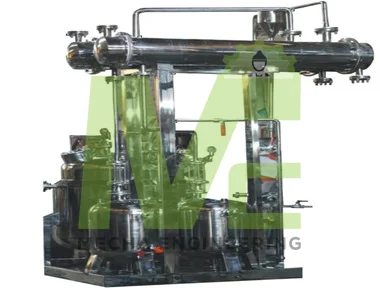
No country on this list has a better feedstock position than Zimbabwe. Tobacco is the biggest export crop, the Mashonaland belt from Centenary, Mvurwi and Mt Darwin through Bindura, Shamva, Karoi and Chinhoyi feeds the auction floors and threshing plants around Harare, and every one of those plants produces dust, fines, stem and scrap in quantity. Most of it currently leaves as waste or as low value material. A nicotine extraction plant is what turns that stream into a product with an export buyer attached.
Buyers searching for a nicotine extraction plant manufacturer in Zimbabwe are choosing between an importing agent and the works that actually builds the plant. Mecha Engineering is the works. We size the line around the waste your threshing floor produces, its assay and the product grade your buyer specifies, then build, assemble and trial it at our own works in Saharanpur, India, before it ships. The standard build runs on a 415 V, 50 Hz three phase supply, which matches Zimbabwean site power.
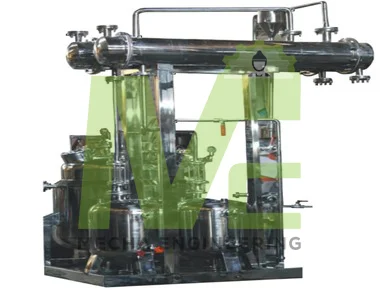
These are the points a Zimbabwean buyer checks before opening a letter of credit, so we put them in writing rather than in a brochure line.
SS 316 or SS 316L on every product contact surface, backed by mill test certificates issued in your company name.
Water run, pressure hold and leak test at our Saharanpur shop. Send a feedstock sample and we run a recovery trial on the pilot skid before the commercial line is built.
Erection, piping tie-in, utility connection, commissioning and operator training at your Zimbabwe site, quoted inside the supply scope, with remote support afterwards.
You buy from the fabricator, not a trading house. No dealer margin, and we quote ex works India as well as CIF Durban or CIF Beira so you can compare landed cost.
Every feature below protects one of three things: the assay your buyer pays for, the people on your floor, or the cost of the medium you put through the plant.
The concentrate never sits in an open vessel. Transfers run through piped, pumped lines to closed receivers and drums, sampling is through closed points, and the handling area is ventilated and bunded with eyewash and shower stations in reach.
Staged contact between the prepared feed and the extraction medium recovers more alkaloid per batch while putting less liquid through the evaporator afterwards, which is where most of the running cost sits.
Concentration under vacuum holds the temperature down, so the assay is protected and steam consumption per batch drops against an atmospheric boil off.
The purification section is built for the specification your buyer actually writes, with in-process sampling points at each stage so a batch is checked on the way through rather than argued about afterwards.
Shell and tube condensers, receivers and a vent condenser return the extraction medium to the next batch. On an imported solvent that recovery is the difference between a viable cost per kilo and a bad one.
De-nicotinised residue is dewatered and discharged in a form you can compost, briquette or feed to a boiler, and the liquid effluent load is designed down rather than left for your treatment plant to absorb.
Take the complete line, or the one section that is holding your existing plant back. Send your feedstock analysis and we will tell you which of these you need.
Screening, de-dusting, foreign matter removal, moisture conditioning, milling and closed conveying, so what reaches the extractor is consistent batch after batch.
Jacketed SS 316 extractors from 100 litres to 10,000 litres with agitation, strainer and drain, plumbed as a battery so one vessel charges while another is extracting.
Staged contact for continuous operation, used where the daily feedstock quantity justifies running through the shift rather than in isolated batches.
Strainers, filter press or sparkler filter, decanter and centrifuge options to take the fines out of the liquor before it reaches the evaporator.
Vacuum evaporator or falling film unit, condensers, receivers and a purification section sized to the grade you supply, with closed transfer to the storage tanks.
A 100 to 500 litre skid for feedstock trials, assay work and yield studies before a commercial line is committed. The usual first step for a new entrant.
Standard build for a batch extraction line with concentration and purification. Every line below is changed to order, so treat this as the starting point for your enquiry rather than a fixed model list.
| Parameter | Standard offering | Options on request |
|---|---|---|
| Plant Type | Batch extraction battery with concentration and purification | Counter-current continuous line, pilot scale skid |
| Extractor Capacity | 100, 250, 500, 1000, 2000 and 5000 litres | Up to 10,000 litres, and multi-vessel batteries |
| Feedstock Accepted | Tobacco dust, fines, scrap leaf, stem and midrib | Floor sweepings, low grade leaf and sheet trim, by agreement |
| Material of Construction | SS 316 on all product contact parts | SS 316L, special alloy where the medium demands it |
| Internal Finish | 220 grit mirror polish on contact surfaces | Electropolished finish for pharmaceutical grade duty |
| Heating Arrangement | Limpet coil or dimple jacket, steam or hot water | Thermic fluid, electric heating on the pilot skid |
| Agitation | Anchor or turbine stirrer with geared motor | VFD speed control, bottom entry drive |
| Filtration | Strainer at the extractor outlet plus filter press | Sparkler filter, decanter, centrifuge, polishing filter |
| Concentration | Vacuum evaporator with condenser and receiver | Falling film or multi-effect unit for larger duty |
| Purification | Purification section sized to your product grade | Additional stages where a higher assay is specified |
| Medium Recovery | Shell and tube condensers, receiver, vent condenser | Chilled water condenser, scrubber on the vent line |
| Handling and Safety | Closed transfer lines, ventilated and bunded area, eyewash and shower points, PPE stations | Gas detection, flameproof fittings where a flammable medium is used, nitrogen purging |
| Residue and Effluent | Dewatering of spent biomass, effluent collection sump | Briquetting or boiler feed tie-in, effluent treatment plant interface |
| Control System | Local panel with temperature, vacuum and level indication | PLC with HMI, recipe storage, batch report, SCADA link |
| Power Supply | 415 V, 3 phase, 50 Hz | Supply voltage changed to suit another site |
| Documentation | GA drawing, P and ID, MOC certificates, test report, manual | DQ, IQ, OQ protocols, third party inspection, licensing support pack |
Scroll the table sideways on a mobile screen. Send your feedstock type, the tonnes you handle per month and the product grade your buyer specifies, and we will fill this sheet in against your process.
The feedstock decides the preparation section and the extractor, not the other way around. This is the shortlist we work through on the first call.
| Feedstock | Preparation needed | Section that changes | Typical source in Zimbabwe |
|---|---|---|---|
| Tobacco Dust and Fines | Screening and de-dusting only | Dust handling and extraction | Threshing plants and processors around Harare |
| Stem and Midrib | Milling and moisture conditioning | Preparation section | Threshing floors across the Mashonaland belt |
| Scrap and Offcut Leaf | Cutting and conditioning | Preparation and extraction | Grading and packing floors at the auction centres |
| Floor Sweepings and Rejects | Screening to remove foreign matter | Preparation and filtration | Any tobacco processing unit in Zimbabwe |
| Low Grade or Unsold Leaf | Drying and cutting | Preparation and extraction | Growers and auction floors in Mashonaland |
| Reconstituted Sheet Trim | Milling only | Preparation section | Sheet and filler plants supplying the trade |
Not sure which row you belong to? Send a feedstock sample with a recent assay report and we will confirm the configuration along with an indicative recovery figure.
Six stages from tobacco waste to a drummed product. Your operator sees the same sequence on every batch, which is what keeps the assay consistent and the records defensible.
Incoming waste is weighed, screened for foreign matter, conditioned for moisture and milled to a consistent size, then conveyed to the extractor in a closed system.
Measured feed and extraction medium are charged to the jacketed extractor. Agitation, temperature and contact time run to the recipe your process team sets.
Liquor is drained through the strainer and clarified in the filtration section. Spent biomass is discharged for dewatering and onward disposal or reuse.
The liquor is concentrated in the vacuum evaporator. Vapour is condensed and the medium returns to the receiver for the next batch rather than going to effluent.
The concentrate passes through the purification section until it meets the specification your buyer has written, with samples drawn at each stage for in-process checks.
Product is pumped through closed lines into drums or tanks held in a ventilated, bunded store, with batch records, weights and assay results filed against each container.
Producers supplying nicotine for nicotine replacement therapy and other pharmaceutical use, where SS 316 contact parts, a polished finish and a complete document set are specified before the first quotation is compared. For a Zimbabwean producer that buyer usually sits in a regulated export market.
Producers shipping nicotine solutions and salts to buyers whose own regulator audits the process, which is why documentation and in-process records are specified alongside the equipment.
Threshing plants and processors around Harare and across the Mashonaland belt turning dust, fines, stem and scrap into an export product instead of a disposal cost, which is the commercial argument most Zimbabwean projects are built on.
Laboratories and institutions needing small, well characterised quantities, usually served by the pilot skid rather than a commercial line.
Intermediate supply into markets where nicotine based formulations remain permitted, which varies by country and is worth confirming with your buyer before you size the plant.
Units processing another company's tobacco waste under contract, who are judged on recovery, turnaround and the completeness of the batch record.
Plants are packed at our Saharanpur works and shipped through Mundra or Nhava Sheva to Durban or Beira, then moved by road to site. These are the centres we quote for most often.
Town not on the list? The list is only where we quote most often. Erection and after-sales service cover all ten provinces of Zimbabwe, and we supply other markets in southern and eastern Africa.
A nicotine extraction line rarely arrives alone. These are the machines buyers most often order in the same enquiry.
Straight answers to what Zimbabwean buyers ask before placing an order.
Mecha Engineering Pvt. Ltd. designs and fabricates nicotine extraction plants at its own works at Village Meharbani on Behat Road, Saharanpur, India, and exports them to Zimbabwe. The company was set up in 2022 and supplies extraction, distillation, filtration and drying plants to tobacco processing, pharmaceutical, herbal and chemical units in Zimbabwe, across India and in other export markets.
Extractors run from 100 litres for pilot and development work up to 10,000 litres for commercial lines, and multi-vessel batteries are built where counter-current or continuous operation is needed. Tell us the tonnes of tobacco waste you handle a month and the assay of that waste, and we work backwards to the extractor size and the number of batches per shift.
Tobacco dust and fines, scrap and offcut leaf, stem and midrib from threshing, floor sweepings after screening, low grade or unsold leaf, and reconstituted sheet trim. What changes between them is the preparation section rather than the extractor, which is why we ask for a feedstock sample and a recent assay report before quoting.
SS 316 is standard on every product contact surface, with SS 316L and special alloys where the medium demands it, and a 220 grit mirror polish as standard with electropolishing available for pharmaceutical grade duty. Mill test certificates for every plate and pipe are issued in your company name and handed over with the GA drawing, the P and ID and the test report.
Nicotine concentrate is acutely toxic, and the plant is designed around that from the first drawing rather than afterwards. Transfers run through closed, piped and pumped lines into closed receivers and drums, sampling is through closed points, and the handling and storage area is ventilated and bunded with eyewash and shower stations, PPE storage and spill containment laid out alongside the equipment. We supply the engineering; the operating procedures and the training for your team sit with you and your safety officer.
Yes. Nicotine is a regulated substance and tobacco is a regulated industry in Zimbabwe in its own right, so two sets of approvals matter: the ones covering the plant, the concentrate store and the effluent, and the position on taking processing waste out of the tobacco chain. Confirm both with the authorities and with the processor supplying your feedstock before you commit to a capacity, because your permitted end market is what decides the purification section you need.
Spent biomass leaves the extractor de-nicotinised and is dewatered, after which most plants compost it, briquette it or feed it to a boiler rather than paying to dump it. The liquid effluent load is kept down by recovering the extraction medium instead of discharging it, and we design the collection sump and the interface to your effluent treatment plant along with the rest of the line.
Yes, and it is common. Typical jobs are adding a proper preparation section ahead of an existing extractor, putting in vacuum concentration to replace an atmospheric boil off, adding a filtration stage before the evaporator, upgrading the medium recovery so less goes to effluent, and fitting closed transfer and a bunded store to a plant that handles concentrate in the open today. Send photographs, your current layout and a nameplate reading to start.
Erection, piping tie-in, utility connection, the water trial, the first feedstock batch and operator training at your Zimbabwe site are quoted inside the supply scope. Our engineers travel for erection and commissioning and back your maintenance team afterwards with drawings, video support and a planned spares schedule.
A pilot or small batch plant is generally ready in 10 to 14 weeks from order confirmation. A commercial line with concentration and purification takes 18 to 26 weeks depending on capacity and the degree of automation, with erection running alongside your civil work. Allow a further 4 to 6 weeks for sea freight and inland haulage. The plant ships in containers through Mundra or Nhava Sheva to Durban or Beira, with flat racks for the taller vessels.
Call +91-9084351006 or +91-7500378000, send a WhatsApp message, or email info@mechaengg.com with four details: the feedstock you will process, the tonnes per month you want to handle, a recent assay of that feedstock and the product grade your buyer specifies. We quote ex works India and on a CIF Durban or CIF Beira basis, with a specification sheet and layout.
Share the feedstock, the tonnes you handle per month and the product grade your buyer specifies. Our engineering team returns a specification sheet, plant layout and a price on both an ex works and a CIF basis, so you can compare on paper rather than on promises.