Verified Material Grade
SS 304 or SS 316 and SS 316L on every surface the shilajit solution and resin touch, backed by mill test certificates issued in your company name.




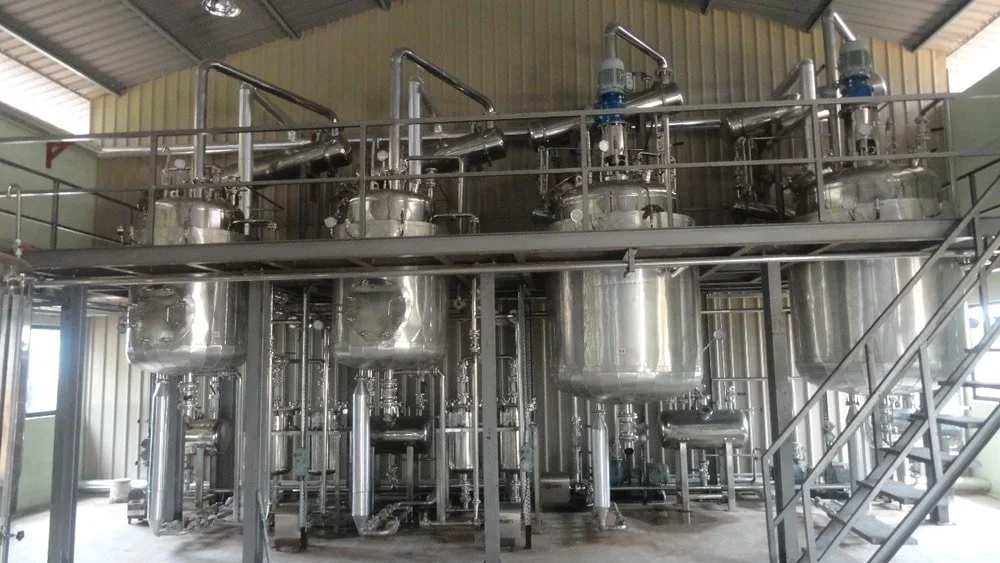
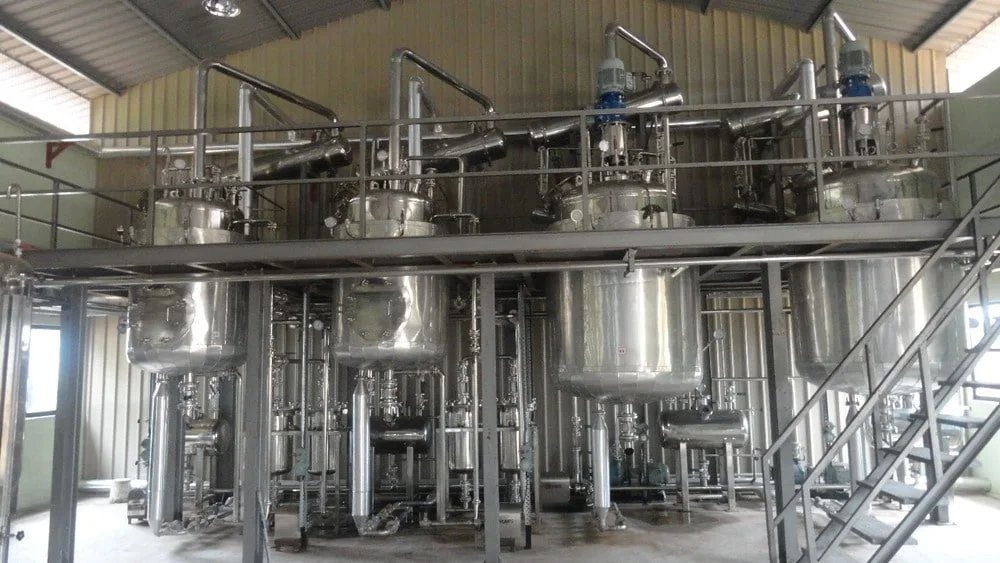
Mecha Engineering designs, fabricates and commissions shilajit extraction and purification plants from its own works at Saharanpur, and supplies them to ayurvedic pharmacies, nutraceutical brands and export processors across India and overseas. Water based lines from a 25 kg pilot batch to 1000 kg of raw shilajit per charge, finishing as purified resin, dry powder or a liquid concentrate.
Raw shilajit reaches the plant the way collectors bring it down from Himachal Pradesh, Uttarakhand, Ladakh and Nepal: dark lumps of rock resin mixed with stone, soil, moss and plant matter. Ayurvedic pharmacies, supplement brands and export buyers will not accept it in that form. They buy purified shilajit resin and powder with a clean appearance, a stated fulvic acid figure and a heavy metal report attached, and that product is made in a plant rather than on a drying floor.
A shilajit extraction plant is the line that closes that gap. Because shilajit is a mineral resin and not a herb, the process is a water based purification: the soluble resin is dissolved out of the rock, clarified through several filtration stages and concentrated under vacuum at low temperature. As the manufacturer, Mecha Engineering sizes the dissolving tanks, filtration train, concentrator and dryer around the raw grade you buy and the final form your customer orders. Design, fabrication, polishing and trials happen at our own Saharanpur works, and the same team erects the plant at your site.
These are the points a shilajit buyer checks before releasing a purchase order, so we put them in writing rather than in a brochure line.
SS 304 or SS 316 and SS 316L on every surface the shilajit solution and resin touch, backed by mill test certificates issued in your company name.
Water run, vacuum hold and leak test at our Saharanpur shop, plus a dissolution, filtration and concentration trial on your own raw shilajit.
Erection, process and utility piping, electrical tie-in, commissioning and operator training at your site, covered in the supply scope.
You buy from the fabricator, not a trading house. No dealer margin, and any design change is quoted against actual material and labour.
Every feature below protects one of three things: the fulvic acid in your resin, the clarity of your final product, or the batch-to-batch consistency your buyer pays for.
Mesh strainer, bag filter, sparkler filter press and polishing cartridges in series, with an optional centrifuge or ultrafiltration skid, so stone, sand and fibre never reach the concentrator.
The clear solution is concentrated under vacuum below 60 degrees Celsius, so fulvic acid and the other heat sensitive compounds are not cooked off in an open boil.
Purified water or a herbal decoction does the extraction. That means no solvent inventory, no solvent recovery train and a simpler pollution board consent than a solvent plant needs.
Stop at the concentrator for soft purified resin, or send the concentrate on to a vacuum tray dryer or spray dryer for powder. Switch between the two by batch.
Mirror polished SS 316 contact parts, crevice free welds, sanitary TC fittings and full drainability, because shilajit resin is sticky and any dead leg becomes a cleaning problem.
Start with hand valves and a local panel, or take PLC control with HMI recipe storage, batch logging and an audit trail when your export buyer asks for one.
A shilajit plant is six sections working in sequence. Take the complete turnkey line, or add the one section your existing unit is short of.
Raw lumps are hand sorted on SS tables, then broken in a crusher or multi mill so the resin exposes more surface to water and dissolves evenly instead of sitting as a hard core.
Feeds every downstream section
Jacketed SS tanks with slow agitators hold the crushed shilajit in warm purified water or a Triphala decoction, with controlled temperature and soak time for each batch.
The heart of the plant
Conical bottom settling tanks let stone, sand and heavy debris drop out. The upper solution is decanted through side valves at set heights, leaving the sludge for a second wash.
Removes the bulk of the rock
Bag filters, a sparkler filter press and cartridge filters in series, with a basket centrifuge or ultrafiltration skid added where the buyer specifies a very clear resin.
Protects final purity
Forced circulation or agitated vacuum evaporator, followed by a jacketed vacuum pan that thickens the solution to soft resin consistency without scorching at the wall.
Decides colour and fulvic retention
Vacuum tray dryer or spray dryer for powder, then pulverising, sifting and blending, or resin filling into glass jars and food grade containers ready for testing and dispatch.
Delivers the saleable product
Where most buyers start, and what each size is actually good for. Recoverable resin varies widely with the rock content of the raw lot, so we confirm yield against a trial on your own shilajit before quotation.
| Plant size | Raw shilajit per charge | Dissolving tank volume | Concentrator size | Best suited to |
|---|---|---|---|---|
| Pilot line | 25 kg | 250 litres | 50 litres per hour evaporation | R and D, sample batches, raw lot evaluation |
| Small batch | 100 kg | 1000 litres | 150 litres per hour evaporation | A first commercial line or an ayurvedic pharmacy bringing purification in house |
| Mid batch | 250 kg | 2500 litres | 300 litres per hour evaporation | Steady resin supply to supplement and D2C wellness brands |
| Large batch | 500 kg | 5000 litres | 500 litres per hour evaporation | Export volumes with a powder drying block |
| Turnkey 1000 kg and above | Multi-tank, shift working | Two or more tanks in rotation | 1000 litres per hour and above | Dedicated shilajit units and contract manufacturers |
Scroll the table sideways on a mobile screen. Tank volumes assume a water to raw material ratio of around 1:6 to 1:8 plus working headroom, and are adjusted to your trial result.
Standard build for a batch shilajit line. Every line below is changed to order, so treat this as the starting point for your enquiry rather than a fixed model list.
| Parameter | Standard offering | Options on request |
|---|---|---|
| Plant Capacity | 25, 100, 250 and 500 kg raw shilajit per batch | Turnkey multi-tank lines from 1000 kg per batch |
| Feed Material | Raw Himalayan shilajit, rock resin or semi-processed lumps | Crusher and sorting tables added for rock-heavy lots |
| Extraction Medium | Purified or RO water | Triphala or other herbal decoction for traditional shodhana |
| Extraction Method | Agitated soak in jacketed dissolving tanks, repeated washes | Circulation loop with inline heater for faster dissolution |
| Material of Construction | SS 304 shell, SS 304 contact parts | SS 316 or SS 316L contact parts, MS jacket to reduce cost |
| Internal Finish | 220 grit mirror polish, around 0.4 micron Ra | Electropolished finish for pharma and export duty |
| Dissolving Temperature | Ambient to 60 degrees Celsius, jacket heated | Hot water or steam jacket with PID temperature control |
| Settling | Conical bottom settling tanks with multi-level decant valves | Additional settling stage for high sand content lots |
| Filtration | Bag filter, sparkler filter press and cartridge filters in series | Basket centrifuge, ultrafiltration skid |
| Concentration Stage | Vacuum evaporation below 60 degrees Celsius | Forced circulation or agitated thin film evaporator |
| Resin Finishing | Jacketed vacuum pan with anchor agitator | Scraper agitator, resin filling station |
| Drying | Vacuum tray dryer for powder | Spray dryer, pulveriser, vibro sifter and blender |
| Typical Output | Purified shilajit resin and dry powder | Liquid concentrate, carrier blended powder |
| Utilities | Steam or hot water, cooling water, vacuum pump, RO water | Chiller for condenser, electric hot water generator |
| Control System | Local panel with temperature indicators and timers | PLC with HMI, recipe storage, batch report, SCADA link |
| Documentation | GA drawing, MOC certificate, test report, manual | DQ, IQ, OQ protocols, weld map, polish and pressure records |
Send your raw shilajit source, batch quantity and the final form you sell and we will fill this sheet in against your process.
The product you sell decides how many sections you need to buy. This is the shortlist we work through with a buyer on the first call.
| Output | Process route | Sections needed | Who buys it |
|---|---|---|---|
| Purified Shilajit Resin | Dissolving, settling, filtration and vacuum concentration to soft resin | Up to the vacuum pan | D2C wellness brands selling resin in jars |
| Shuddha Shilajit | Shodhana in Triphala decoction, filtration and gentle concentration | Up to the vacuum pan, with decoction tank | Ayurvedic pharmacies and classical formulators |
| Shilajit Powder | Concentrate dried in a vacuum tray dryer, then milled and sifted | Full line including drying and milling | Capsule, tablet and churna manufacturers |
| Spray Dried Extract | Clear solution blended with a carrier and spray dried | Full line with spray dryer | Nutraceutical and export buyers wanting a free flowing powder |
| Liquid Concentrate | Partial vacuum concentration to a set solids level | Up to the evaporator | Drops, shots and liquid supplement brands |
| Fulvic Rich Fraction | Additional fine filtration or ultrafiltration before concentration | Full line with ultrafiltration skid | Premium supplement and cosmetic ingredient buyers |
Not sure which row you belong to? Share your target customer and order size and we will confirm the route along with an indicative yield per 100 kg of raw shilajit.
Six stages from raw rock resin to packed product. Your operator sees the same sequence on every batch, which is what keeps colour, texture and assay consistent.
Raw lumps are hand sorted to remove loose stone and foreign matter, then broken to small pieces so the resin dissolves evenly and no hard core is left behind.
Crushed shilajit is soaked in warm purified water or a Triphala decoction under slow agitation. The resin, fulvic acid and minerals go into solution and the rock stays solid.
Agitation stops and the heavy debris settles in the conical bottom. The clear upper solution is decanted off, and the sludge gets a second wash to recover what is left.
The decanted solution passes through bag, sparkler and cartridge filters in turn. Each stage takes out finer particles until the solution runs clear and dark.
The clear solution is concentrated under vacuum below 60 degrees Celsius. Water leaves as vapour and the solution thickens into a glossy, soft purified resin.
Resin is filled as it is, or dried in a vacuum tray dryer and milled to powder. Each batch is sampled for fulvic acid, moisture and heavy metals before it is packed.
Units making Shuddha Shilajit for classical formulations such as Shilajatvadi Vati and Chandraprabha Vati, who need a repeatable shodhana process and documentation for their AYUSH licence.
Capsule, tablet and gummy makers buying shilajit powder with a consistent fulvic acid figure and a heavy metal report, batch after batch.
Brands selling purified resin in glass jars online, where texture, gloss and a clean taste decide repeat orders as much as the lab report does.
Processors supplying resin and powder to the US, UK, Europe and the Gulf, whose buyers audit the plant and ask for batch records and a certificate of analysis on every lot.
Makers of creams, serums and hair care products that use shilajit extract or a fulvic rich fraction as an active ingredient.
Collectors and producer groups in Himachal Pradesh, Uttarakhand and Ladakh adding value close to the source instead of selling raw rock resin to traders.
Dispatch and site service run out of Saharanpur, a short drive from the Himalayan belt where most Indian shilajit is collected. Open your state below for local supply detail, the buyers we work with there, licensing and freight.
State not listed yet? The pages above are only where we publish local detail. We dispatch, erect and service shilajit extraction plants in every state and union territory, and export the same plants overseas with sea worthy packing and documentation handled from our side.
Each of these is manufactured at Saharanpur and can be ordered on its own or as part of the turnkey plant.
Straight answers to what buyers ask before and after a site visit.
A shilajit extraction plant is a stainless steel process line that purifies raw shilajit, the mineral rock resin collected in the Himalayas. Crushed raw shilajit is dissolved in warm purified water, the rock and plant debris is settled and filtered out, and the clear solution is concentrated under vacuum at low temperature into purified shilajit resin. A drying section can then turn that resin into powder.
In six stages. Raw lumps are sorted and crushed, then soaked in warm purified water or a Triphala decoction under slow agitation. The heavy debris settles and the clear solution is decanted, passed through bag, sparkler and cartridge filters, and concentrated under vacuum below 60 degrees Celsius into soft resin. The resin is filled as it is or dried and milled to powder, then tested and packed.
No organic solvent is needed. Shilajit is purified with purified or RO water, or with a herbal decoction such as Triphala when the buyer wants traditional Shuddha Shilajit. Because there is no hexane, acetone or ethanol on site, the plant does not need a solvent recovery train or flameproof hazardous area fittings, which keeps both the capital cost and the consent process simpler than a solvent extraction plant.
Fulvic acid and the other bioactive compounds in shilajit are sensitive to heat. Boiling the solution in an open vessel darkens it, can scorch resin on the wall and lowers the fulvic acid figure on the lab report. Concentrating under vacuum lets water evaporate below 60 degrees Celsius, so the resin keeps its colour, gloss and assay.
Batch lines start at 25 kg of raw shilajit per charge for pilot and sample work and run up to 500 kg per batch. Turnkey plants of 1000 kg per batch and above are built with two or more dissolving tanks working in rotation. Tell us how much raw shilajit you want to process each month and we work backwards to the tank size, filtration area and evaporator capacity.
It depends on the raw lot. Rock-heavy shilajit gives much less recoverable resin than semi-processed lumps, and the figure changes from one collector to the next. Rather than quote a number blind, we run a dissolution and filtration trial on a 5 kg sample of your own raw shilajit and give you a yield figure you can budget against.
Yes. The dissolving, settling, filtration and concentration sections alone give purified shilajit resin, which is what most jar and D2C brands sell. Adding a vacuum tray dryer or spray dryer, with a pulveriser and sifter, turns the same concentrate into powder for capsules, tablets and churna. Many units start with resin and add the powder block later.
The plant removes stone, sand, soil and plant debris, which is where much of the insoluble contamination sits. Metals that dissolve along with the resin are not removed by filtration, so the heavy metal result of the finished product depends largely on the raw lot. We advise testing each raw lot for lead, arsenic, mercury and cadmium before purchase, and testing every finished batch before release.
Cost is driven by five things: the batch size, whether you stop at resin or go on to powder, SS 304 against SS 316 contact parts, the filtration stages you need, and manual valves against PLC control. Because those swing the figure widely, we do not publish a single price. Send your batch quantity and final form and a specification sheet with a price comes back within one working day.
Typically a consent to establish and consent to operate from your state pollution control board, a factory licence, and a product licence that matches how the shilajit is sold: an AYUSH manufacturing licence for Ayurvedic products, or an FSSAI licence where it is sold as a food or nutraceutical. Export buyers usually add GMP or third party audit requirements of their own. We supply the equipment list and layout details that these applications ask for.
Yes. Erection, process and utility piping, electrical tie-in, water trial, the first shilajit batch and operator training at your site are part of the supply scope. Our own crew travels from the Saharanpur works with the consignment and stays until the plant has run a full batch on your own raw shilajit.
A batch resin line with dissolving, filtration and concentration ships in 8 to 10 weeks from order confirmation. A full turnkey line with powder drying and PLC control takes 12 to 14 weeks. We dispatch to every state in India and export the same plants overseas, with sea worthy packing, marine insurance and documentation handled from our side.
Share your raw shilajit source, the batch size you want to run and the final form you want to sell. Our Saharanpur engineering team returns a specification sheet, layout drawing and price so you can compare on paper rather than on promises.