Verified Material Grade
SS 304 or SS 316 and SS 316L on all product contact surfaces, backed by mill test certificates issued in your company name.





Mecha Engineering fabricates stainless steel herbal extraction plants at its Saharanpur works and supplies them to pharmaceutical, ayurvedic, nutraceutical, food and cosmetic units across India and export markets. Vessels from 100 litres to 10,000 litres, manual to PLC controlled, built to the recipe you actually run.
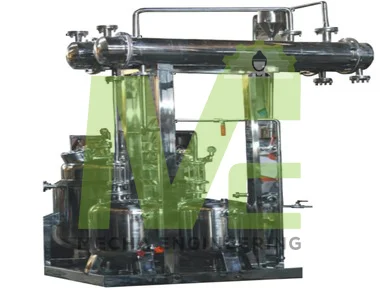
India does not have one herbal processing industry, it has a dozen. Mentha runs through Barabanki and Chandausi, turmeric through Sangli, psyllium and cumin through Unjha, ashwagandha through Neemuch, senna and henna through Jodhpur and Sojat, forest produce through Bastar and Ranchi, and Himalayan herbs down from Chamoli and Pithoragarh. Each of those materials behaves differently in a vessel.
That is why Mecha Engineering Pvt. Ltd. does not sell a fixed model list. As a herbal extraction plant manufacturer in India, we start from the material you feed, the solvent you are permitted to use and the yield your buyer audits, then size the vessel, jacket, condenser and filtration around that. Fabrication happens at our own works at Village Meharbani, Behat Road, Saharanpur, so drawings, welding, polishing and trials stay under one roof and one engineering team.
For laboratory and R and D scale trials rather than production volumes, see our Herbal Extraction Pilot Plant.
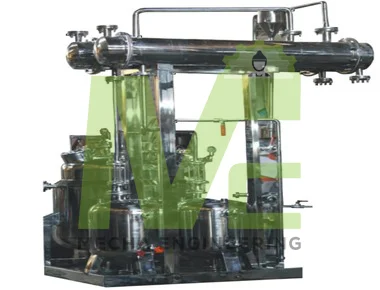
These are the points buyers check before releasing a purchase order, so we put them in writing rather than in a brochure line.
SS 304 or SS 316 and SS 316L on all product contact surfaces, backed by mill test certificates issued in your company name.
Water run, vacuum hold and leak test at our Saharanpur shop. Send your herb sample and we run a yield trial before the plant leaves.
Erection, piping tie-in, utility connection, commissioning and operator training at your site, covered in the supply scope.
You buy from the fabricator, not a trading house. No dealer margin, and any design change is quoted against actual material and labour.
Every feature below exists to protect one of two things: the actives in your herb, or the hours your operator spends on a batch.
Product contact parts in SS 304 or SS 316 for hygiene, corrosion resistance and a long service life under continuous production, with a 220 grit mirror finish inside.
Controlled temperature, fixed solvent to solid ratio and timed soak recover the maximum active content and give the same extract strength from the first batch to the hundredth.
Top manhole for charging, a removable SS mesh basket for spent marc and a bottom flush outlet, so changeover between herbs costs you minutes rather than a shift.
Shell and tube condenser with receiver and a vapour line sized for your solvent, so ethanol and hexane return to the cycle instead of going up a vent.
Handles leaves, roots, seeds, barks, flowers, spices, tea and coffee using water, hydro-alcoholic or solvent based extraction, with the internals changed to suit.
Mineral wool insulation under SS 304 cladding and controlled jacket heating keep steam consumption and running cost down over the life of the plant.
Pick the line that matches your material, or send your process sheet and we will tell you which of these fits.
The workhorse for ayurvedic and nutraceutical units. Handles decoction, percolation, reflux and hydro-alcoholic extraction in the same vessel with a condenser and oil separator.
Solvent circulation and vacuum concentration sized for turmeric oleoresin and curcuminoid recovery, with crystalliser and dryer tie-in available.
Low temperature water extraction with multi-stage filtration and vacuum concentration so fulvic acid content survives the process.
Rotating drum with internal baffles for better solvent contact on light, fluffy material such as flowers, leaves and tea. Lower solvent volume for the same yield.
Battery of extractors with counter-current flow, ethanol or hexane circulation, solvent recovery column and safety fittings for flammable duty.
Steam distillation vessel with gooseneck, condenser and Florentine oil separator. Built for mint, lemongrass, citronella, rose and khus loads.
Most buyers start by asking for a vessel size. The better question is how much herb you want to put through in a shift, because that is what decides the number.
| Vessel capacity | Typical herb charge per batch | Suited to |
|---|---|---|
| 100 litres | 10 to 20 kg | R and D, pilot batches and process trials before scale up |
| 250 litres | 25 to 50 kg | Small commercial units running one or two products |
| 500 litres | 50 to 100 kg | Growing ayurvedic and herbal manufacturers |
| 1000 litres | 100 to 200 kg | Standard commercial extraction line |
| 2000 litres | 200 to 400 kg | Multi-product contract manufacturing units |
| 3000 to 5000 litres | 400 to 1000 kg | Large ayurvedic and nutraceutical plants |
| Up to 10,000 litres | 1000 kg and above | Oleoresin, mentha and export scale production |
Charge quantities are indicative. Dried leaf occupies far more volume per kilogram than root or seed, so the final figure is set against your material's bulk density during sizing.
Standard build for a multifunctional extractor. Every line below is changed to order, so treat this as the starting point for your enquiry rather than a fixed model list.
| Parameter | Standard offering | Options on request |
|---|---|---|
| Vessel Capacity | 100, 250, 500, 1000, 2000, 3000 and 5000 litres | Up to 10,000 litres, and multi-vessel batteries |
| Material of Construction | SS 304 shell, SS 304 contact parts | SS 316 or SS 316L contact parts, MS jacket to reduce cost |
| Internal Finish | 220 grit mirror polish, around 0.4 micron Ra | Electropolished finish for pharma duty |
| Heating Arrangement | Limpet coil jacket, steam at up to 3 kg per sq cm | Dimple jacket, thermic fluid, or electric heaters |
| Operating Temperature | Ambient to 120 degrees Celsius | Up to 150 degrees Celsius with thermic fluid |
| Design Pressure | Full vacuum on shell, atmospheric on inside | Pressure vessel design and third party certification |
| Agitation | Anchor or turbine stirrer, geared motor, top entry | Bottom entry magnetic drive, VFD speed control |
| Filtration | Removable SS mesh basket with bottom strainer | Cartridge, bag or sparkler filter, plate and frame press |
| Solvent Compatibility | Water, ethanol, hydro-alcoholic mixes | Hexane, IPA, methanol, ethyl acetate with flameproof fittings |
| Condenser and Recovery | Shell and tube condenser with SS receiver | Chilled water condenser, vent condenser, oil separator |
| Insulation and Cladding | 50 mm mineral wool under SS 304 cladding | Higher thickness for thermic fluid service |
| Control System | Local panel with temperature indicator and timer | PLC with HMI, recipe storage, batch report, SCADA link |
| Documentation | GA drawing, MOC certificate, test report, manual | DQ, IQ, OQ protocols, weld map, polish and pressure records |
Scroll the table sideways on a mobile screen. Send your herb, batch size and solvent and we will fill this sheet in against your process.
The method decides the vessel, not the other way around. This is the shortlist we work through with a buyer on the first call.
| Method | Solvent or medium | Best suited to | Where we see it in India |
|---|---|---|---|
| Decoction and Water Extraction | Hot water | Polysaccharides, tannins, water soluble actives | Ayurvedic kwath and syrup units in Lucknow, Haridwar and Jaipur |
| Hydro-Alcoholic Percolation | Ethanol and water blend | Flavonoids, alkaloids, standardised extracts | Nutraceutical and export units in Noida, Gurugram, Ahmedabad and Pune |
| Reflux Extraction | Ethanol under condenser | Higher recovery from dense roots and barks | Ashwagandha and safed musli processors in Neemuch and Chhindwara |
| Solvent Extraction | Hexane, ethyl acetate, ethanol | Oleoresins, curcuminoids, seed oils | Turmeric oleoresin in Sangli, spice oleoresin in Kanpur and Bharuch |
| Steam Distillation | Steam only, no solvent | Volatile essential oils and aromatic waters | Mentha in Barabanki, attar in Kannauj, damask rose in Chamoli |
| Counter-Current or Rotary | Ethanol or water, staged | High yield with lower solvent consumption | Large volume contract extraction, tea and flower processors |
| Vacuum Concentration | Downstream of any method | Heat sensitive actives, thick extracts | Shilajit in Kumaon, makhana and fruit concentrates in Bihar |
Not sure which row you belong to? Share the herb name and the part used and we will confirm the method along with an indicative yield range.
Six stages from raw herb to finished extract. Your operator sees the same sequence on every batch, which is what keeps the output consistent.
Herb is cleaned, dried to the target moisture and cut or coarsely milled so the solvent can reach the cell wall.
Material goes into the mesh basket through the top manhole, then measured solvent is added to the set solid to solvent ratio.
Jacket heating brings the batch to the set temperature. Agitation and soak time run to the recipe, with reflux where the solvent is volatile.
Liquid extract is drained through the bottom strainer and filtered. Spent marc is lifted out with the basket for disposal or a second pass.
The extract is concentrated under vacuum. Condensed solvent collects in the receiver and returns to the next batch.
Output is drawn off as liquid, soft or semi-solid extract, or sent forward to a spray or vacuum dryer for a free flowing powder.
Kwath, ghrita, asava and standardised extract lines. AYUSH and GMP units ask for SS 316 contact parts and a full IQ or OQ document set.
Capsule, tablet and gummy makers needing consistent marker compound levels batch after batch, usually with PLC batch logging and an audit trail.
Natural colour, oleoresin, tea and coffee extract lines where food grade construction, a CIP spray ball and sanitary outlets are not negotiable.
Small batch botanical extraction with tight temperature control, plus separators for oil and hydrosol recovery for skin and hair care ingredients.
Steam distillation and solvent extraction for mint, lemongrass, citronella, rose and khus, and for isolating single phytochemicals at purity.
Multi-product units that switch herbs weekly, so they buy for quick changeover, recipe storage and third party audit readiness.
Common raw materials include leaves, roots, seeds, barks, flowers, fruits, spices, tea, coffee and medicinal herbs.
Dispatch and site service run out of Saharanpur to every state. Pick yours to see the material, clusters and delivery detail for that region.
State not listed yet? Supply, erection and after-sales service cover every state and union territory in India, along with export markets. Tell us where the site is and we will quote the freight and erection with the plant.
Every plant is engineered and built around your process. Nothing is bought in and badged, so a design change is a conversation rather than a new supplier.
Food and pharma grade stainless steel with proper polishing and finishing, and mill test certificates for every plate and pipe in your company name.
Design, manufacturing, installation, commissioning and operator training from the same team, so there is no gap between who built it and who starts it.
Quick access to the engineers who built your plant for spares, service and process help, instead of a ticket queue.
Competitive pricing with support for domestic and overseas clients, including export documentation and sea worthy packing.
Gaskets, mesh baskets, seals and sight glasses ship the same week you ask, so a wear part never becomes a week of lost production.
Straight answers to what buyers ask before and after a site visit.
A herbal extraction plant is a system that separates active compounds from herbs and botanical raw materials using a solvent such as water, ethanol or a hydro-alcoholic mix. The liquid is then filtered and concentrated, leaving an extract used in medicines, supplements, food and cosmetics.
Yes. We design each plant around your raw material, solvent, batch size and required output. Capacity, heating, agitation, filtration, automation and solvent recovery are all configurable, which is why we ask for the process sheet before quoting a price.
Product contact parts are built in SS 304 or SS 316 stainless steel for hygiene, corrosion resistance and a long service life. Mill test certificates for every plate and pipe are issued in your company name and handed over with the plant along with the GA drawing and test report.
The plant handles leaves, roots, seeds, barks, flowers, fruits, spices, tea, coffee and medicinal herbs. The internals change with the material: leaf needs a large basket and a gentle agitator, root needs reflux and a heavier drive, and seed or husk needs a deeper basket and a vent condenser.
Single vessels run from 100 litres for pilot and R and D work up to 10,000 litres for commercial lines, with multi-vessel batteries where counter-current or continuous operation is needed. Tell us the daily herb quantity you want to process and we work backwards to the vessel size and the number of batches per shift.
We supply and install across India, with dispatch from our Saharanpur works. Detailed pages covering the material, processing clusters and delivery times are available for Uttar Pradesh, Uttarakhand, Haryana, Rajasthan, Madhya Pradesh, Maharashtra, Gujarat, Bihar, Jharkhand and Chhattisgarh, and we quote freight and erection for every other state on request.
Yes. Erection, piping tie-in, utility connection, water trial, first herb batch and operator training are part of the supply scope. After that you get direct access to the engineers who built the plant for spares, service and process help.
Price depends on capacity, material grade, heating arrangement and how much automation you want, so there is no useful list price. Send us the herb and the part used, the batch quantity in kilograms, the solvent and the form of extract you want, and a specification sheet with a price comes back within one working day.
Standard vessels ship in 4 to 8 weeks from order confirmation. Automated and multi-vessel plants take 10 to 12 weeks. Road transit from Saharanpur ranges from a same day run in the north to about five days for the far south and east, and for larger vessels we arrange the trailer, route survey and unloading crane along with the dispatch.
Yes. We supply to export markets along with export documentation and sea worthy packing. Commissioning support is arranged either by sending an engineer or by guided remote commissioning, depending on the destination and the scope agreed.
A pilot plant is used for laboratory and R and D scale trials and small batches, while a commercial herbal extraction plant is built for regular production volumes. Many buyers start with a 100 litre pilot unit to fix the recipe, then scale to a commercial vessel using the same solvent ratio and soak time. For R and D scale needs, see our Herbal Extraction Pilot Plant.
Share the herb, the batch size and the solvent. Our Saharanpur engineering team returns a specification sheet, layout drawing and price so you can compare on paper rather than on promises.