Verified Material and Plate
Drum shell plate thickness, flight material and stainless steel contact parts for food and herbal duty are confirmed in writing, with material certificates.





Mecha Engineering designs and builds rotary drum dryers at its own works in Saharanpur, for continuous moisture removal from bulk solids in the agro, feed, food, herbal, chemical, mineral and biomass industries. Each dryer is built for your material, moisture level and throughput, with the heating method that suits your product, and supplied across India and to export markets.

Grain, feed, spices, press mud, distillers grain, chemical powders, sand and ores all leave the process wetter than they can be stored, ground, packed or sold. Tray dryers and open yards cannot keep up with that volume, and drying that is uneven leaves wet pockets that cake, spoil or clog the next machine in line.
A rotary drum dryer solves this with a rotating, slightly inclined cylinder fitted with internal lifting flights. As the drum turns, the flights cascade the material through a stream of hot air, so drying is even and the output is consistent. As a drum dryer manufacturer in India, Mecha Engineering builds each dryer at its Saharanpur works for your material, moisture level and throughput, and backs it with dryer selection, capacity planning, installation guidance and after-sales service.
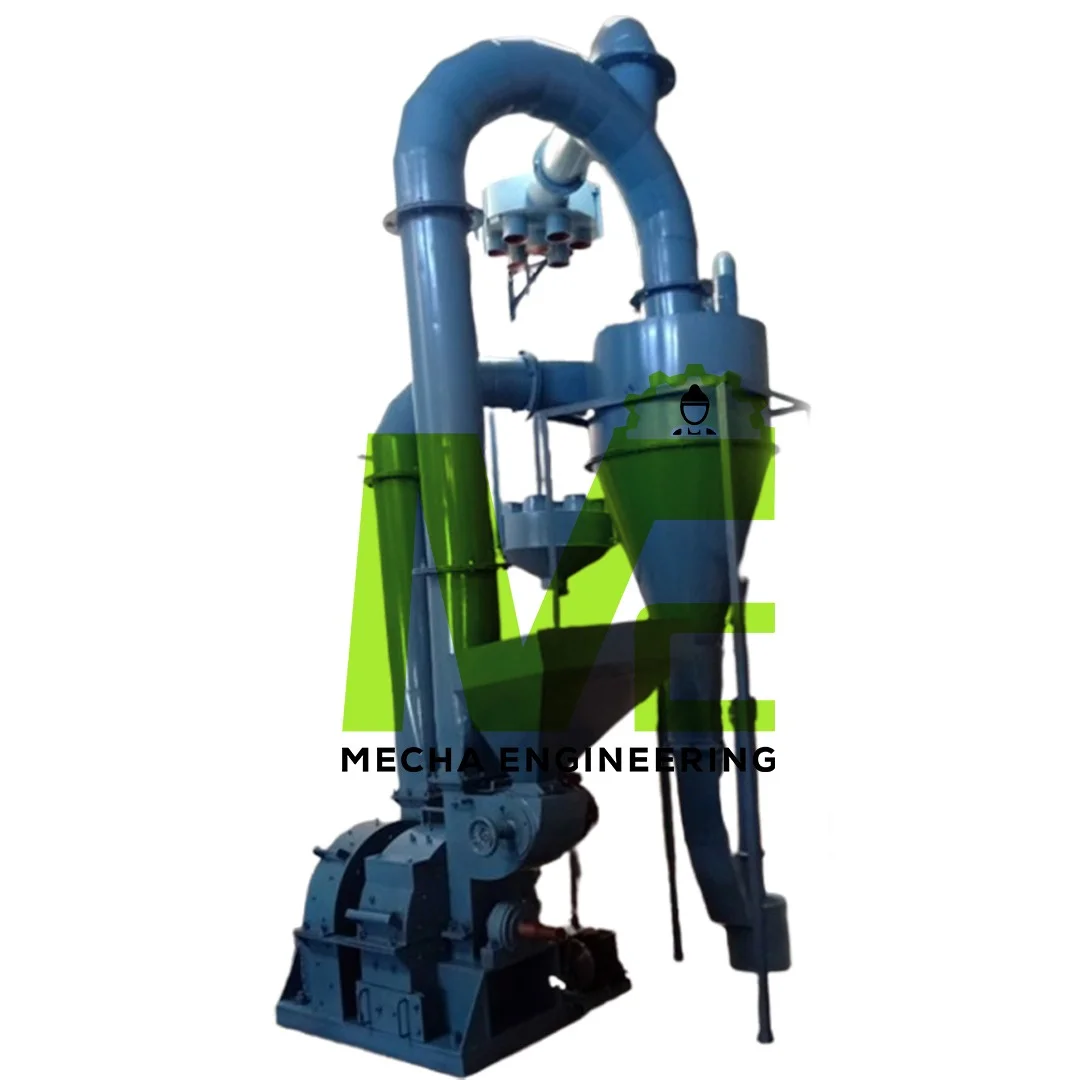
These are the points a plant head checks before releasing a dryer order, so we put them in writing rather than in a brochure line.
Drum shell plate thickness, flight material and stainless steel contact parts for food and herbal duty are confirmed in writing, with material certificates.
Drum size, rotation speed, slope and air volume are worked out from your feed rate and moisture figures, and from a sample trial where the material is new to us.
Our team supports foundation checks, drum alignment on the trunnions, ducting, first run and performance tuning at your plant.
You buy from the fabricator, not a trading house. No dealer margin, and any change to drum size, heat source or dust collection is quoted against actual cost.
Every feature below protects one of three things: the moisture figure on your finished product, your fuel bill, or the hours your dryer stays online.
Continuous rotation and lifting flights cascade the material through the hot gas, giving uniform drying and a consistent final moisture across the whole output.
A heavy duty cylindrical shell on riding rings and trunnion rollers handles dense or abrasive bulk materials over long operating cycles.
Hot gas can contact the material directly for the highest efficiency, or the drum can be heated indirectly for products that must not touch combustion gas.
Flight design, insulation and airflow are set together to lower the energy used for each kilogram of dried product.
Built for steady, high volume drying around the clock, with reliable results from one shift and one season to the next.
A simple mechanical design and easy access points reduce downtime and service cost, so routine checks do not stop production for long.
Six builds cover almost every drying duty we see. Tell us the material and we will point you to the right one.
Hot gas from the burner or furnace passes straight through the drum and touches the material, for the highest thermal efficiency.
Sand, minerals and fertiliser
Clean hot air from a heat exchanger or steam heater does the drying, so combustion gas never reaches the product.
Food, feed, herbal and pharma materials
Hot air and wet material enter at the same end, so the hottest air meets the wettest material and the product leaves the drum cooler.
Heat sensitive and very wet feeds
Hot air enters at the product outlet end and moves against the material, for the lowest final moisture and the best fuel economy.
Materials that tolerate heat
A second rotating drum cools the product with ambient air before bagging, so it does not cake or sweat in the bag.
Fertiliser, feed, meal and granules
Stainless steel drum, flights and product contact parts with indirect heating, so the product stays free of rust and flue gas.
Spices, herbs and food ingredients
Six stages from wet feed to dry product. The same sequence runs continuously, which is what keeps the final moisture steady hour after hour.
Wet material is fed by screw or belt feeder into the inlet end of the slightly inclined, rotating drum at a steady rate.
Internal flights lift the material as the drum turns, then let it shower down through the hot gas stream, which exposes a large surface area to the heat.
Hot air or gas removes moisture by contact, either directly through the drum or indirectly through a heated shell for sensitive products.
Evaporated moisture leaves the drum with the exhaust air, drawn through by an induced draft fan at a controlled rate.
The exhaust passes through a cyclone or dust collector, which recovers fine particles as saleable product and keeps the stack clean.
The dried material moves down the incline to the outlet at the required moisture level, ready for cooling, grinding, storage or packing.
Standard build for our rotary drum dryers. Every line below is changed to order, so treat this as the starting point for your enquiry rather than a fixed model list.
| Parameter | Standard offering | Options on request |
|---|---|---|
| Dryer Type | Rotary drum dryer, continuous operation | Co-current or counter-current flow, dryer with cooler |
| Capacity | 100 kg per hour to 5 tonnes per hour wet feed | Twin drum lines for higher throughput |
| Drum Size | 0.6 to 2.5 metres diameter, 4 to 20 metres long | Set to your capacity and residence time |
| Material of Construction | Mild steel drum and flights | Stainless steel drum or stainless steel contact parts, wear liners |
| Heating Source | Hot air generator, direct or indirect | Gas, oil or steam heating |
| Internals | Lifting flights designed for the material | Lump breaker, knockers for sticky feed |
| Drive | Motor and gearbox, drum on trunnion roller support | Girth gear and pinion, VFD speed control |
| Feeding | Screw or belt feeder at the inlet | Rotary airlock, feed hopper with level control |
| Dust Control | Cyclone on the exhaust | Pulse jet bag filter, wet scrubber |
| Insulation | Mineral wool with cladding on hot ducts | Insulated drum shell with cladding |
| Control Panel | Starters, temperature indicators and interlocks | PLC with HMI, temperature and moisture logging |
| Customisation | Drum size, flights and heating set to your material and moisture | Layout to fit your building and existing conveyors |
| Support | Selection, installation guidance and after-sales service | Performance tuning on your material |
Scroll the table sideways on a mobile screen. Specifications vary by material and throughput, so share your material, feed moisture, target moisture and capacity and our team will recommend a configuration.
The material decides the heating, flow and build. This is the shortlist we work through with a buyer on the first call.
| Material | Heating and flow | Drum build | Typical user |
|---|---|---|---|
| Grains and Agro By-products | Indirect heated, co-current | Mild steel drum | Grain processors and agro units |
| Animal Feed, Oil Cake and Meal | Indirect heated, with cooler | Mild steel or stainless steel, dryer and cooler drums | Feed mills and solvent plants |
| Distillers Grain and Press Mud | Indirect or direct, co-current | Stainless steel contact parts, lump breaker at feed | Distilleries and sugar mills |
| Spices, Herbs and Food Ingredients | Indirect heated, low temperature | Stainless steel drum and flights | Spice, herbal and food processors |
| Chemical Powders, Salts and Intermediates | Indirect heated | Stainless steel contact parts, sealed ends | Chemical and allied units |
| Sand, Ores and Mineral Powders | Direct fired, counter-current | Mild steel drum with wear liners | Mineral, glass and foundry sand processors |
| Biomass and Recycling Materials | Direct or indirect, co-current | Mild steel drum, heavy flights | Pellet, briquette and recycling plants |
Material not in the list? Share its name, feed moisture, target moisture and maximum safe temperature and we will confirm the build before quoting.
Grains, agro by-products and animal feed, dried to a safe storage moisture so they do not heat up, cake or spoil in the godown.
Spices, pulps, herbs and dehydrated products, dried at controlled temperature in stainless steel dryers that keep colour and aroma intact.
Powders, salts and intermediates coming off filters and centrifuges, dried in sealed drums with product recovered from the exhaust.
Sand, ores and mineral powders dried before grinding, screening or shipping, in heavy duty drums with wear liners for abrasive duty.
Wet distillers grain dried into DDGS for feed, and press mud and bagasse dried for bio fertiliser and fuel use.
Sawdust, agro residue, straw and recycled materials dried before pelletising, briquetting or further processing.
Dispatch and service run out of Saharanpur to every state in the country. Open your state below for the local industries we supply there, the locations we serve most often and answers for buyers in that state.
State not listed yet? The pages above are only where we publish local detail. We supply, install and service drum dryers in every state and union territory, and export the same dryers overseas with sea worthy packing and documentation handled from our side.
Each of these is manufactured at Saharanpur and can be ordered on its own or along with your dryer.
Straight answers to what buyers ask before placing a dryer order.
A drum dryer, in this case a rotary drum dryer, is a rotating, slightly inclined cylinder with internal lifting flights. Wet bulk material cascades through a hot gas stream inside the drum, the moisture evaporates, and dried material is discharged at the outlet end.
Wet material is fed into the rotating drum. Lifting flights raise the material and let it shower down through hot air, which removes moisture. The dried product moves along the slight incline to the discharge end, while moist air leaves through the exhaust and a cyclone or dust collector recovers the fines.
It dries bulk solids such as grains, agro by-products, animal feed, oil cake, distillers grain, press mud, spices, chemical powders, salts, sand, ores, minerals and biomass. The flights and heating are set to suit the material. Very sticky pastes may need a lump breaker at the feed, and thin liquids suit a spray dryer rather than a drum dryer.
We build drum dryers across a range of throughputs, typically from about 100 kg per hour to 5 tonnes per hour of wet feed in a single drum, and size the drum to your duty. The real sizing figure is the water to be evaporated per hour, so share your material, feed moisture, target moisture and required capacity and we will recommend a configuration.
Hot air, gas, oil or steam can be used. Direct heating suits most materials and gives the best efficiency, while indirect heating is used where the product must not contact combustion gas, such as food, feed and herbal materials. Biomass fired hot air generators are a common low cost choice where agro residue is available.
In a direct fired dryer the hot gas from the burner or furnace passes through the drum and touches the material, which gives the highest efficiency and suits sand, minerals and fertiliser. In an indirect heated dryer, clean hot air from a heat exchanger or steam heater does the drying, so combustion gas never reaches the product.
The drum is built in mild steel or stainless steel depending on the product and the duty. Mild steel with wear liners suits abrasive sand and minerals, while stainless steel drums or stainless steel contact parts are used for food, feed, herbal and chemical materials.
Every dryer has a cyclone on the exhaust to recover fine product. A pulse jet bag filter or wet scrubber is added after the cyclone where the material is very fine or the pollution board sets a tighter emission limit, which also recovers more saleable product.
For materials we have dried before, your feed rate and moisture figures are usually enough to size the dryer. For a new or unusual material, a sample helps us check how it dries, whether it sticks, and the safe maximum temperature, so the drum length and air volume are based on your product rather than a rule of thumb.
Price depends on the evaporation load, drum size, mild steel or stainless steel construction, heat source, dust collection and level of automation. Because these change the figure widely, we do not publish a single price. Send your material, feed moisture, target moisture and capacity and a specification sheet with price comes back within one working day.
Yes. We help with dryer selection and capacity planning, and we provide installation guidance, drum alignment, first run and performance tuning, along with spares and ongoing service.
Yes. We supply across India and to export markets, with sea worthy packing and export documentation handled from our side.
Share your material, feed moisture, target moisture, capacity and the fuel available at your site. Our Saharanpur engineering team returns a dryer selection, layout drawing and price so you can compare on paper rather than on promises.