Verified Material and Plate
Drum shell plate thickness, flight material and SS 304 contact parts for food and herbal duty are confirmed in writing, with material certificates.





Mecha Engineering designs and builds rotary drum dryers at its own works in Saharanpur, India, and supplies them to ethanol plants, sugar estates, stockfeed mills, maize millers, spice processors, fertiliser units and mineral processors across Zimbabwe. Continuous dryers that bring bulk material down to a set moisture, sized to your feed rate, inlet moisture and target moisture.
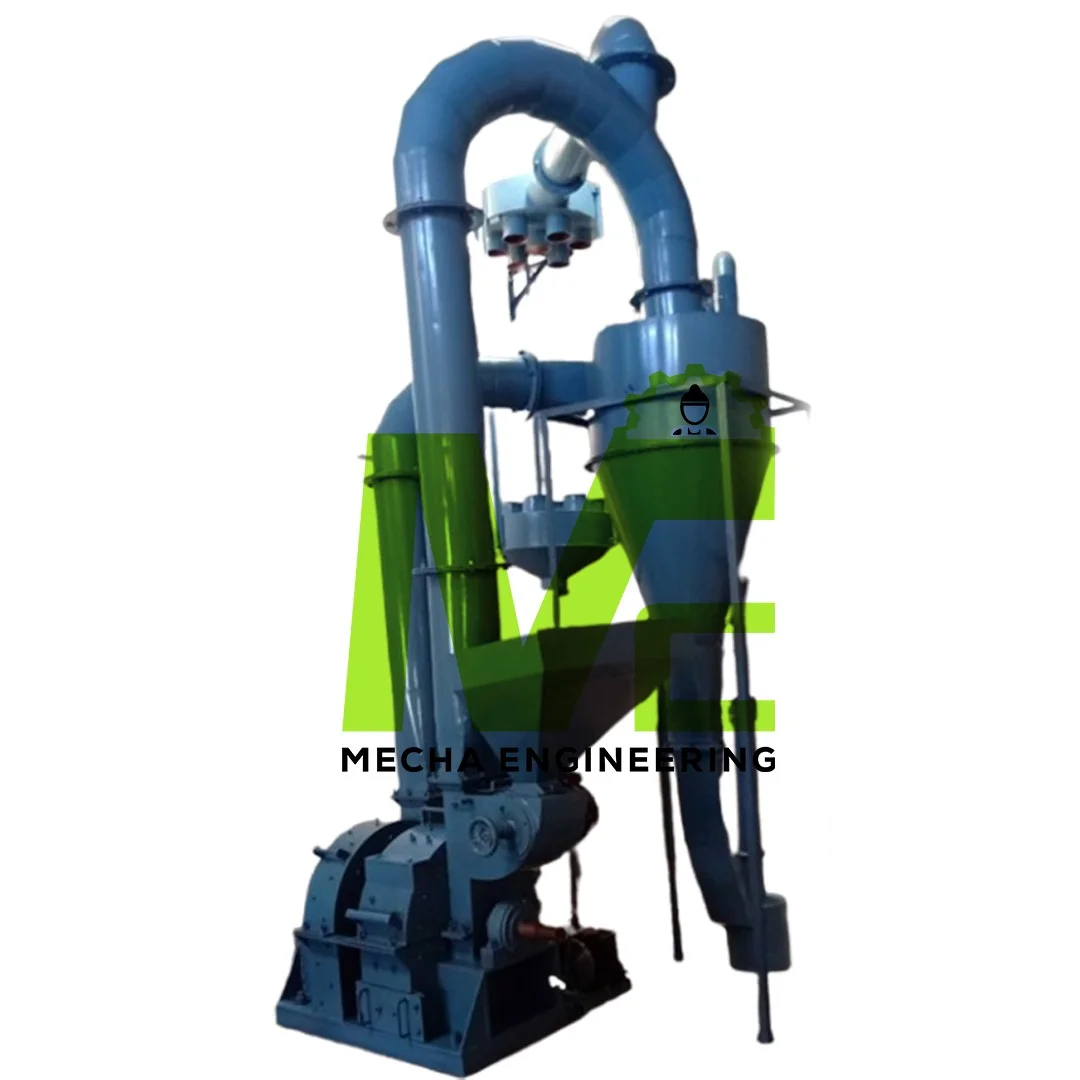
Zimbabwe produces a great deal of wet bulk material and dries a good share of it badly. The ethanol plants at Chisumbanje and Triangle turn out wet distillers grain every hour. The sugar estates of Chiredzi, Triangle and Hippo Valley leave press mud and bagasse behind. Stockfeed mills, maize millers, paprika and spice processors, organic fertiliser units and the quarry and mineral operations of the Midlands and Matabeleland all need the same thing before they can store, grind, pack or sell: moisture taken out evenly, at a rate that keeps up with the plant.
A drum dryer does that job continuously. Wet material enters one end of a slowly rotating, slightly inclined drum, internal flights lift and shower it through a stream of hot air, and dry material leaves the other end at the target moisture. Buyers searching for a drum dryer manufacturer in Zimbabwe are choosing between an importing agent and the works that actually builds the dryer. Mecha Engineering is the works. Each dryer is designed, fabricated and assembled at our Saharanpur factory in India, sized to your feed rate, inlet moisture, target moisture and heat source.
These are the points a Zimbabwean plant head checks before opening a letter of credit, so we put them in writing.
Drum shell plate thickness, flight material and SS 304 contact parts for food and herbal duty are confirmed in writing, with material certificates.
Drum size, rotation speed, slope and air volume are worked out from your feed rate and moisture figures, and from a sample trial where the material is new to us.
Our engineers travel to Zimbabwe for foundation checks, drum alignment on the trunnions, ducting, the first run and performance tuning at your plant.
You buy from the fabricator, not a trading house. No dealer margin, and we quote ex works India as well as CIF Durban or CIF Beira so you can compare landed cost.
Every feature below protects one of three things: the moisture figure on your finished product, your fuel bill, or the hours your dryer stays online.
A thick walled cylindrical drum on riding rings and trunnion rollers, built for long running cycles and for abrasive or dense materials such as sand, minerals and fertiliser.
Internal flights lift the material and shower it through the hot air stream along the full drum length, so every particle sees the same heat and leaves at an even moisture.
The airflow is sized to the evaporation load, the drum and hot ducts are insulated, and heat loss at the ends is kept low, so less fuel goes into each tonne of dry product.
Flight pattern, drum slope and rotation speed are set together, so material moves evenly from inlet to outlet with a controlled residence time and no build up inside the drum.
Cyclone separators recover product from the exhaust, and a bag filter or wet scrubber cleans the air further, so fines are not lost and the stack meets pollution board norms.
Easy access points, inspection doors and simple cleaning features help operators keep downtime short and hold the dryer at steady output from one season to the next.
Six builds cover almost every drying duty we see in Zimbabwean plants. Tell us the material and we will point you to the right one.
Hot gas from the burner or furnace passes straight through the drum and touches the material. The highest thermal efficiency, for sand, minerals, fertiliser and other materials that tolerate flue gas.
Clean hot air from a heat exchanger or steam heater does the drying, so combustion gas never reaches the product. The right choice for food, feed, herbal and pharma materials.
Hot air and wet material enter at the same end, so the hottest air meets the wettest material. Suits heat sensitive products that must leave the drum cool.
Hot air enters at the product outlet end and moves against the material. Gives the lowest final moisture and the best fuel economy for materials that tolerate heat.
A second rotating drum cools the product with ambient air before bagging, for fertiliser, feed and granules that would cake or sweat if packed hot.
SS 304 drum, flights and product contact parts with indirect heating, for spices, herbs, food ingredients and ayurvedic raw material that must stay free of rust and flue gas.
Standard build for our rotary drum dryers. Every line below is changed to order, so treat this as the starting point for your enquiry.
| Parameter | Standard offering | Options on request |
|---|---|---|
| Dryer Type | Continuous rotary drum dryer with internal flights | Direct or indirect heating, co-current or counter-current flow |
| Feed Capacity | 100 kg per hour to 5 tonnes per hour wet feed | Twin drum lines for higher throughput |
| Drum Diameter | 0.6 to 2.5 metres | Sized to your evaporation load |
| Drum Length | 4 to 20 metres | Sized to the residence time your material needs |
| Drum Material | MS shell and flights | SS 304 drum or SS 304 product contact parts, wear liners |
| Rotation and Slope | Variable speed drive, adjustable drum slope | VFD control of drum speed |
| Drive | Geared motor with chain and sprocket | Girth gear and pinion on larger drums |
| Support | Riding rings on trunnion and thrust rollers | Hardened rollers for heavy mineral duty |
| Heat Source | Biomass, bagasse or coal fired hot air generator | Diesel, LPG or gas burner, steam or thermic fluid heater |
| Inlet Air Temperature | Set to the material, low for herbal and food, higher for minerals | Controlled by temperature controller at the drum inlet |
| Feeding | Screw feeder or belt feeder at the inlet | Rotary airlock, lump breaker for sticky feed |
| Dust Collection | Cyclone separator with rotary airlock | Pulse jet bag filter, wet scrubber |
| Insulation | Mineral wool with cladding on hot ducts | Insulated drum shell with cladding |
| Control Panel | Starters, temperature indicators and interlocks | PLC with HMI, outlet moisture and temperature logging |
| Power Supply | 415 V, 3 phase, 50 Hz | Supply voltage changed to suit another site |
| Export Packing | Drum and sections shipped on flat rack or open top, ancillaries crated | Container loading plan and site assembly drawings |
| Documentation | GA drawing, material certificate, manual | Foundation drawing, performance test report |
Scroll the table sideways on a mobile screen. Send your material, feed rate, inlet moisture and target moisture and we will fill this sheet in against your duty.
The material decides the heating, flow and build. This is the shortlist we work through with Zimbabwean buyers on the first call.
| Material | Heating and flow | Drum build | Typical Zimbabwe user |
|---|---|---|---|
| Wet Distillers Grain | Indirect heated, co-current | SS 304 contact parts, lump breaker at feed | Ethanol plants at Chisumbanje and Triangle |
| Press Mud and Bagasse | Direct or indirect, co-current | MS drum, heavy flights | Sugar estates and compost units in the Lowveld |
| Stockfeed and Oilcake | Indirect heated, with cooler | MS or SS 304, dryer and cooler drums | Stockfeed mills and oil expressers |
| Maize, Grain and Pulses | Indirect heated, co-current | MS or SS 304 contact parts | Maize millers and grain handlers |
| Paprika, Herbs and Spices | Indirect heated, low temperature, co-current | SS 304 drum and flights | Paprika, herb and spice processors in the eastern highlands |
| Quarry Sand and Minerals | Direct fired, counter-current | MS drum with wear liners | Quarry and mineral operations in the Midlands |
| Fertiliser and Organic Manure | Direct or indirect, with cooler | MS drum, dryer and cooler | Fertiliser and organic manure plants |
Material not in the list? Share its name, inlet moisture, target moisture and maximum safe temperature and we will confirm the build before quoting.
Six steps from your first call to a dryer running at target moisture on your line.
You share the material, feed rate, inlet moisture, target moisture, fuel available and space at site, or we visit the plant and take the figures with your team.
Where the material is new to us, we check its drying behaviour on a sample, then size the drum, air volume, heat source and dust collection around the result.
You receive a general arrangement drawing, specification sheet and price, with the foundation loads your civil team needs.
The drum, flights, riding rings, hot air generator, cyclone and ducting are fabricated at our Saharanpur works, and the drum is run on rollers before dispatch.
Our team guides erection, drum alignment and ducting at your site, then runs the dryer on your material and tunes temperature, speed and feed rate.
Rollers, bearings, chains, seals and filter bags ship from stock, and service visits are planned from Saharanpur for plants anywhere in the state.
Drying wet distillers grain into DDGS for sale as stockfeed, at the ethanol plants at Chisumbanje and Triangle and at the distilleries.
Drying press mud, bagasse and organic manure across the Lowveld sugar estates of Chiredzi, Triangle and Hippo Valley.
Drying and cooling feed ingredients, oilcake and pellets for the stockfeed mills that serve Zimbabwe's dairy, poultry and beef sector.
Drying maize, grain, pulses and food ingredients before milling and packing, for processors in Harare, Bulawayo, Norton and Gweru.
Low temperature drying of paprika, chilli, herbs and botanical raw material in SS 304 dryers, for the processors of Chipinge, Mutare and the eastern highlands.
Drying quarry sand, minerals and fertiliser granules for the quarry, mineral and fertiliser operations of the Midlands and Matabeleland.
Dryers are dispatched by road from our Saharanpur works and installed by our own team. These are the districts we supply most often.
Town not listed? The list shows where we quote most often. We supply and service equipment in all ten provinces of Zimbabwe, and in other markets across southern and eastern Africa.
Straight answers to what Zimbabwean buyers ask before placing a dryer order.
Mecha Engineering Pvt. Ltd. manufactures rotary drum dryers at its own works in Village Meharbani, Behat, Saharanpur, India, and exports them to Zimbabwe. Drums, flights, hot air generators, cyclones and ducting are fabricated and assembled in the same factory and supplied to ethanol plants, sugar estates, stockfeed mills, food, spice, fertiliser and mineral processors.
From 100 kg per hour of wet feed on a small dryer up to 5 tonnes per hour on a single drum, with twin drum lines above that. Drum diameters run 0.6 to 2.5 metres and lengths 4 to 20 metres. Tell us your feed rate, inlet moisture and target moisture and we size the drum, air volume and heat source against the evaporation load rather than against a model number.
Direct fired is more thermally efficient and suits materials that tolerate contact with flue gas, such as quarry sand, minerals and fertiliser. Indirect heating keeps combustion gas away from the product and is the right choice for stockfeed, maize, food ingredients, paprika, herbs and anything going into a food or feed chain. The material decides it, not the budget.
Biomass, bagasse or coal fired hot air generators, or a diesel, LPG or gas burner, or steam and thermic fluid where you already have a boiler. On a sugar estate bagasse is usually the cheapest heat available, and a biomass or coal fired generator also keeps the dryer running when grid supply is unreliable, which matters more here than the headline efficiency figure.
Yes, and we prefer to. Courier a sample of your wet material with its inlet moisture and the target you need, and we check how it dries, how it behaves as it moves through the drum and whether it is sticky at the feed end. The drum length, diameter, slope, rotation speed and air volume all come out of that result.
A cyclone separator with a rotary airlock as standard, which also recovers product fines that would otherwise be lost up the stack. A pulse jet bag filter or a wet scrubber is added where the material is fine or where your environmental approval requires it. Tell us the limit you have to meet and we specify the train against it.
Yes. SS 304 drum, flights and product contact parts with indirect heating is the standard build for maize, stockfeed, paprika, herbs and food ingredients. MS with wear liners is used for sand, minerals and fertiliser, where abrasion rather than product contact is the issue.
Foundation and layout drawings, erection guidance, drum alignment on the trunnions, ducting, the first run on your own material and performance tuning at your Zimbabwe site are quoted inside the supply scope. Our engineers travel for commissioning and back your maintenance team afterwards with drawings, video support and a planned spares schedule.
A standard dryer is ready in 10 to 14 weeks from order confirmation, and a large drum with a hot air generator, cooler and bag filter in 16 to 20 weeks. Allow a further 4 to 6 weeks for sea freight and inland haulage. Long drums ship in sections on a flat rack or open top container and are assembled at site, with the ancillaries crated and the assembly drawings supplied.
Price depends on the drum size, the heat source, whether a cooler is needed, the dust collection arrangement and the material of construction. Because these change the figure widely, we do not publish a single price. Send your material, feed rate, inlet moisture and target moisture and we quote ex works India and on a CIF Durban or CIF Beira basis so you can compare landed cost.
Share the material, feed rate, inlet moisture, target moisture and the fuel available at your site. Our Saharanpur engineering team returns a dryer selection, layout drawing and price so you can compare on paper rather than on promises.