Verified Material Grade
SS 304 or SS 316 and SS 316L on shell, plates, cups and screens, backed by mill test certificates issued in your company name.





Mecha Engineering fabricates horizontal plate sparkler filter presses at its Saharanpur works and installs them at pharmaceutical, ayurvedic, FMCG, distillery and food processing units across Uttarakhand. Plate sizes from 8 inch to 33 inch, standard and zero hold-up models, built around the liquid you actually filter.
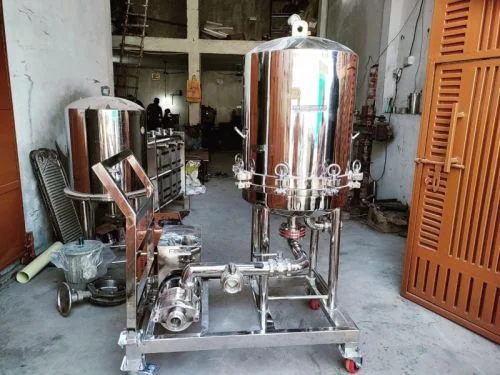
Uttarakhand packs an unusual amount of filtration demand into thirteen districts. The SIDCUL estates at Haridwar, Rudrapur, Pantnagar and Sitarganj carry pharmaceutical, FMCG and food plants. Bhagwanpur, Roorkee and Selaqui near Dehradun add formulation and ayurvedic units. Haridwar and Rishikesh hold one of the country's largest concentrations of ayurvedic and herbal extract manufacturing, while Kashipur runs sugar, distillery and paper, and Haldwani and Kotdwar add agro and food processing.
Every one of those lines ends at the same problem: the batch is made, but it is not clear. A sparkler filter press solves that in one closed, leak-proof pass. As a sparkler filter press manufacturer supplying Uttarakhand, Mecha Engineering starts from your liquid, its viscosity, its solid load and the clarity your buyer specifies, then fixes the plate diameter, the number of plates, the filter media and the pump around it. Fabrication happens at our own Saharanpur works, so plate machining, shell rolling, polishing and the water trial all stay under one roof before the machine is despatched to Uttarakhand.
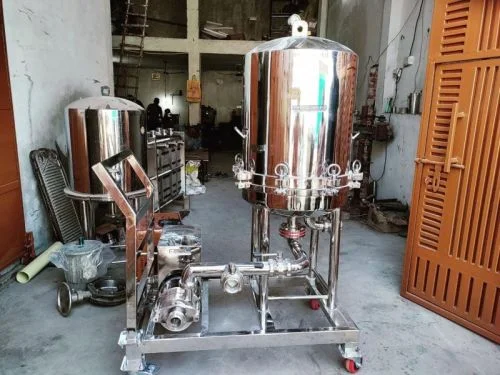
These are the points Uttarakhand buyers check before releasing a purchase order, so we put them in writing rather than in a brochure line.
SS 304 or SS 316 and SS 316L on shell, plates, cups and screens, backed by mill test certificates issued in your company name.
Water run, pressure hold and leak test at our Saharanpur shop. Send your liquid sample and we run a clarity trial before the machine leaves.
Positioning, piping tie-in, pump wiring, commissioning and operator training at your Uttarakhand site, covered in the supply scope.
You buy from the fabricator, not a trading house. No dealer margin, and any design change is quoted against actual material and labour.
Every feature below exists to protect one of two things: the clarity of your filtrate, or the product you would otherwise lose in the machine.
Shell, dish end, plates and cartridge assembly are built from SS 304, SS 316 or SS 316L. The machine stands up to acidic syrups, solvents and hot liquids instead of pitting after one season.
Horizontal plates with filter media, perforated screens and interlocking cups hold the cake in place and let only clear filtrate through the central channel. With filter aid, particles down to about 1 micron are retained.
Because plates sit horizontally, the cake does not slip off when the pump stops. Thickness stays even across the stack, so recovery per cycle is higher and the cake lifts out cleanly at changeover.
A reverse flow or zero hold-up cartridge pushes the residual liquid out at the end of the cycle. For high value pharma, herbal extract and essential oil batches this is the difference between recovering the last litres and mopping them up.
Pump, piping and filter are mounted on one SS clad base with castors, so the unit rolls between rooms. The bolted top cover opens for a full plate-by-plate clean, which matters when you switch products weekly.
The same shell takes a different number of plates, so filter area is matched to your throughput rather than sold as a fixed model. Scavenger arrangement, jacketed plates and a flameproof motor are all available.
Pick the model that matches your liquid and batch size, or send your process sheet and we will tell you which of these fits.
The workhorse horizontal plate filter. SS shell with bolted top cover, disc type plates, perforated screens and interlocking cups, mounted with pump and piping on a castor base.
Reverse flow cartridge that clears residual liquid from the shell at the end of the cycle. Built for expensive batches where even a few litres left behind is a real loss.
All contact parts SS 316 or SS 316L, non-contact SS 304, mirror polished surfaces, sanitary fittings and a documentation set suited to a pharma or export audit.
Steam or hot water jacket on the shell so viscous liquids stay at temperature through the cycle. Standard on honey, ghee, wax, edible oil and thick syrup lines.
Flameproof motor and starter, earthing bosses and solvent resistant gaskets for ethanol, IPA, hexane and other flammable filtrations in extraction halls.
8 inch and 14 inch units for laboratories, pilot plants and small batch producers who need the same filtration result on a few hundred litres a day.
Standard build for a horizontal plate sparkler filter. Every line below is changed to order, so treat this as the starting point for your enquiry rather than a fixed model list.
| Parameter | Standard offering | Options on request |
|---|---|---|
| Plate Diameter | 8, 14, 18, 24 and 33 inch | Intermediate sizes and special cartridges to drawing |
| Number of Plates | 4 to 20 plates per cartridge | Up to 33 plates, extended shell height |
| Material of Construction | SS 304 shell, plates, cups and screens | SS 316 or SS 316L contact parts, MS shell for utility duty |
| Design Type | Standard horizontal plate sparkler filter | Zero hold-up or reverse flow cartridge, GMP model |
| Surface Finish | Matt finish outside, smooth internal surfaces | 180 or 220 grit mirror polish on all contact parts |
| Filter Media | Filter paper or filter cloth on perforated screens | SS wire mesh, cellulose pads, PP or synthetic media |
| Working Pressure | Up to 3 kg per sq cm | Higher rating with certified pressure vessel design |
| Sealing | Neoprene or nitrile gasket with tightening ring nuts | PTFE, silicone or EPDM gasket for solvent and pharma duty |
| Feed Pump | SS centrifugal pump with flexible coupling | Gear, lobe, roto or diaphragm pump to suit viscosity |
| Motor | 0.5 HP to 5 HP TEFC motor, 415 V, 3 phase | Flameproof motor and starter, VFD speed control |
| Standard Fittings | Air vent, pressure gauge, inlet and outlet connection, drain | Scavenger line, sight glass, jacketed shell, sampling valve |
| Mounting | SS clad base frame on castor wheels | Fixed base plate, floor anchored skid |
| Documentation | GA drawing, MOC certificate, test report, manual | DQ, IQ, OQ protocols, weld map, polish and pressure records |
Scroll the table sideways on a mobile screen. Send your liquid, batch quantity and viscosity and we will fill this sheet in against your process.
Throughput depends on viscosity, solid load and media, so the figures below are indicative. This is the shortlist we work through with a Uttarakhand buyer on the first call.
| Plate size | Typical plates | Indicative output | Typical Uttarakhand application |
|---|---|---|---|
| 8 inch (200 mm) | 4 to 12 | Around 100 to 500 litres per hour | Laboratory, pilot and R and D units in Dehradun and Selaqui |
| 14 inch (350 mm) | 4 to 16 | Around 500 to 2,000 litres per hour | Ayurvedic, herbal extract and nutraceutical lines in Haridwar and Rishikesh |
| 18 inch (450 mm) | 6 to 20 | Around 2,000 to 4,000 litres per hour | Pharmaceutical and FMCG plants in Rudrapur, Pantnagar and Sitarganj |
| 24 inch (600 mm) | 8 to 24 | Around 4,000 to 8,000 litres per hour | Distilleries, sugar syrup and edible oil units in Kashipur and Haldwani |
| 33 inch (840 mm) | 10 to 33 | Around 8,000 to 20,000 litres per hour | Large sugar, distillery and bulk oil lines in Udham Singh Nagar |
| Zero hold-up build | Any of the above | Same as base model | High value API, herbal extract and essential oil batches |
| Jacketed build | Any of the above | Depends on temperature held | Ghee, honey, wax and thick syrup processors across the state |
Not sure which row you belong to? Share the liquid name, the litres you filter per shift and its viscosity and we will confirm the plate size along with a cycle time estimate.
Six stages from cloudy feed to clear filtrate. Your operator sees the same sequence on every batch, which is what keeps the output consistent.
Filter media is laid on the perforated screens, plates and interlocking cups are stacked in order and the top cover is bolted down against the gasket.
The pump sends unfiltered liquid into the central channel from the bottom of the shell. The air vent on top is opened until the machine fills, then closed.
Suspended solids are held on the media resting on each plate. Clear filtrate passes through the peripheral holes into the tank and out at the outlet.
The inlet pressure gauge rises as the cake builds. When it reaches the set limit, the cycle has reached its holding capacity and the feed is stopped.
Compressed air or the scavenger line clears the liquid left in the shell. On a zero hold-up unit, reverse flow recovers the residual batch almost completely.
The cover is opened, plates are lifted out, cake is scraped off and the media is changed. The shell is washed down and the machine is ready for the next cycle.
Injectable solutions, oral liquids, intermediates and solvent filtration. GMP units ask for SS 316 contact parts, mirror polish and IQ or OQ documentation.
Kwath, asava, syrups and hydro-alcoholic extracts coming off an extractor, where the filtrate has to be bright before concentration or bottling.
Alcoholic liquor, sugar syrup, juice and soft drink lines around Kashipur and Udham Singh Nagar, where polishing filtration decides the shelf appearance.
Refined oil polishing, ghee clarification and honey filtration on jacketed units that keep the product warm and flowing through the full cycle.
Solvent based liquids, resins, varnishes and inks where a closed, leak-proof assembly and solvent resistant gaskets are non-negotiable.
Cosmetic and personal care makers in the Haridwar and Rudrapur estates, plus essential oil and aromatic houses that cannot afford product hold-up in a small batch.
Dispatch and site service run out of Saharanpur to every district in Uttarakhand. These are the locations we work in most often.
District not on the list? The list is only where we have installed most recently. Site visits, erection and after-sales service cover every district in Uttarakhand, plus neighbouring Uttar Pradesh, Himachal Pradesh, Haryana, Punjab and Delhi NCR.
Straight answers to what Uttarakhand buyers ask before and after a site visit.
Mecha Engineering Pvt. Ltd. designs and fabricates sparkler filter presses at its own works at Village Meharbani on Behat Road, Saharanpur, Uttar Pradesh, and supplies them across Uttarakhand. The company was set up in 2022 and serves pharmaceutical, ayurvedic, chemical, distillery, food and cosmetic units in Uttarakhand, the rest of India and export markets.
Unfiltered liquid is pumped under positive pressure into the central channel of the cartridge from the bottom of the shell. Suspended particles are held on the filter media resting on each horizontal plate, while clear filtrate passes out through the peripheral holes into the tank and leaves at the bottom outlet. Because the shell wall never contacts the unfiltered liquid, it stays clean through the cycle.
Standard plate diameters are 8, 14, 18, 24 and 33 inch, with 4 to 33 plates depending on the model and the shell height. Indicative output runs from around 100 litres per hour on a small 8 inch pilot unit to roughly 20,000 litres per hour on a fully loaded 33 inch machine. Actual throughput depends on your liquid viscosity, solid load and media, so tell us the litres you filter per shift and we work backwards to the plate size.
A standard sparkler filter leaves some liquid inside the shell at the end of the cycle, which is acceptable for water based and low cost liquids. A zero hold-up or reverse flow model uses a modified cartridge and piping to push that residual liquid out, so recovery is close to complete. Pharmaceutical, herbal extract, essential oil and API buyers usually choose the zero hold-up build because the product left behind costs more than the price difference.
The standard build uses SS 304 for the shell, plates, screens and interlocking cups. SS 316 and SS 316L are used where the liquid is corrosive or where a pharma audit requires it, and a common GMP arrangement is SS 316 on all contact parts with SS 304 on non-contact parts. Mill test certificates for every plate and pipe are issued in your company name and handed over with the machine along with the GA drawing and test report.
Yes, with a jacketed shell. Steam or hot water in the jacket keeps the liquid at working temperature so it does not thicken and choke the media midway through the cycle. This is the normal build for ghee and honey processors, ayurvedic syrup lines in Haridwar and thick syrup duty across Uttarakhand, usually paired with a gear or lobe pump rather than a centrifugal one.
Filter paper suits fine polishing, filter cloth handles heavier solid loads, and SS wire mesh, cellulose pads or PP media are used where the liquid or the cleaning cycle demands it. Media is changed when the inlet pressure gauge reaches the set limit, which is the signal that the cake has filled the plate. Filter aid such as hyflow or activated carbon is added upstream when you want a sparkling finish.
Positioning, piping tie-in, pump and panel wiring, water trial, first product batch and operator training at your Uttarakhand site are part of the supply scope. Because dispatch is from Saharanpur, an engineer usually reaches a Haridwar, Roorkee or Dehradun site the same day, which keeps commissioning short.
Standard handover covers the general arrangement drawing, material of construction certificates, hydro and pressure test reports, weld and polish records, the operating and maintenance manual and a spare parts list. DQ, IQ and OQ protocols, along with a validation document set, are prepared on request for GMP and export buyers.
Standard 8 to 18 inch units ship in 2 to 4 weeks from order confirmation. Larger 24 and 33 inch machines, jacketed shells and flameproof builds take 5 to 6 weeks. Freight to Uttarakhand is short and quoted at actual cost. Haridwar, Roorkee and Dehradun are a same day run from Saharanpur and the Kumaon estates are next day, and because the machine ships on its own castor base, unloading and positioning at your site are straightforward.
Call +91-9084351006 or +91-7500378000, send a WhatsApp message, or email info@mechaengg.com with four details: the liquid you are filtering, the litres per hour or per shift you need, its viscosity and temperature, and whether you need a standard or zero hold-up model. A specification sheet and price come back within one working day.
Share the liquid, the throughput you need and the clarity your buyer specifies. Our Saharanpur engineering team returns a specification sheet, model recommendation and price so you can compare on paper rather than on promises.